As the United States emerged from the Civil War and entered the Gilded Age, the nation faced growing questions about its identity and future on the world stage. Former President Ulysses S. Grant unexpectedly became a symbol of those questions during his nearly three-year world tour beginning in 1877. His travels across Europe, Asia and Latin America are the focus of William Paterson University history professor Louis L. Picone’s forthcoming book, Ulysses’s Odyssey: Ulysses S. Grant’s World Tour at the Dawn of American Empire.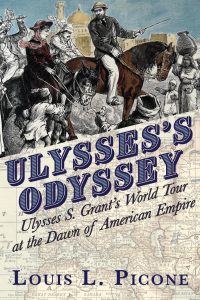
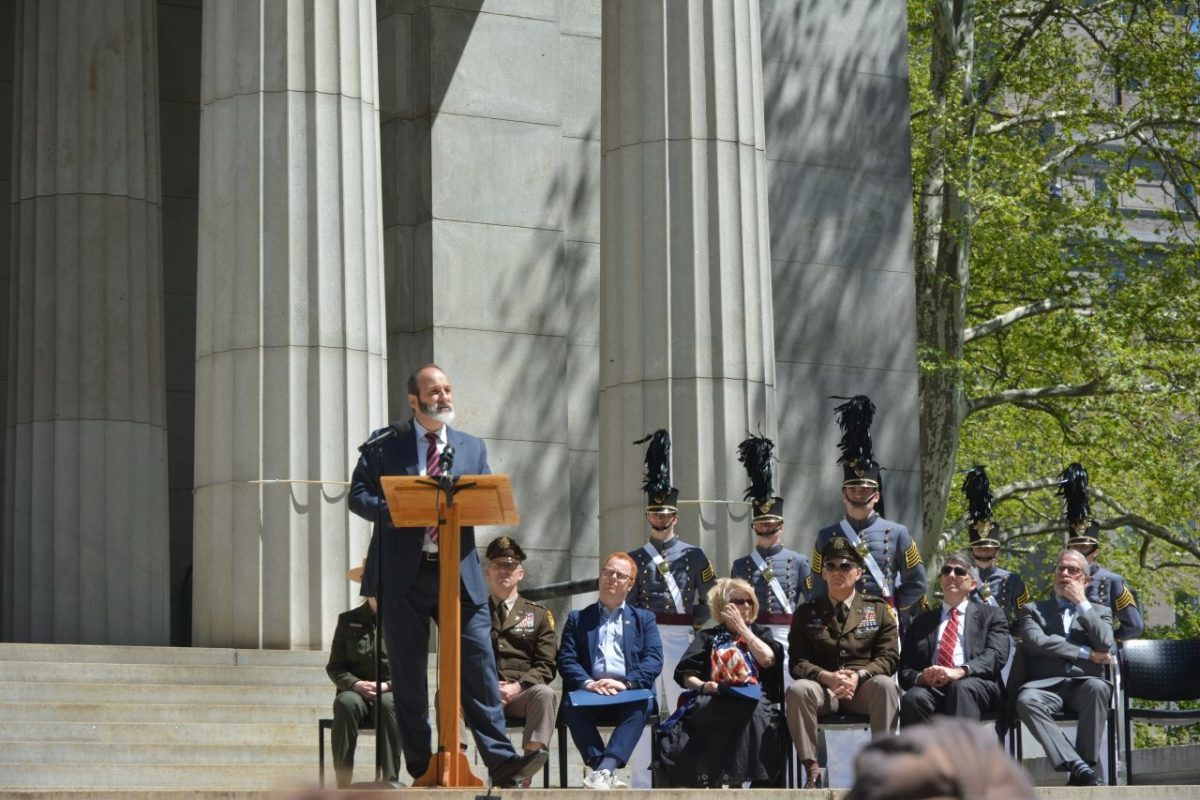
Picone, a best-selling and award-winning author whose previous works include Grant’s Tomb: The Epic Death of Ulysses S. Grant and the Making of an American Pantheon, recently discussed the themes of the book while speaking at Grant’s 204th birthday commemoration at General Grant National Memorial. What began for Picone as research into a presidential travel story evolved into a deeper examination of America’s emergence as an international power.
Picone explained that Grant’s journey came at a critical moment in American history. The Civil War had ended little more than a decade earlier, Reconstruction remained ongoing and many foreign nations still questioned whether the United States could survive long term as a unified country.
The Gilded Age is underway by the time Grant embarks on his tour, creating an atmosphere where European powers were carefully watching America’s recovery and political stability.
In that environment, Grant became far more than a former president traveling abroad. Picone described him as “the embodiment of victory and union and reunification,” explaining that many people overseas viewed Grant as the personification of a country that had survived internal collapse. Foreign leaders and ordinary citizens alike saw him as a symbol of democracy, national unity and the preservation of representative government.
Although Grant originally hoped to experience the world quietly as a private citizen, the scale of public attention quickly made that impossible. Crowds gathered throughout Europe to welcome him, particularly in England, where thousands lined the streets in Liverpool upon his arrival. Picone joked that England “didn’t see crowds like this until the Beatles 100 years later,” illustrating the extraordinary level of fascination surrounding Grant’s tour.
The book details how advances in telegraph communication, newspaper circulation and railroad travel helped transform Grant’s travels into one of the earliest internationally followed media events. Reports of his movements spread rapidly across continents, fueling public excitement wherever he visited. Picone said Grant unintentionally evolved into “almost the first global rock star, global celebrity,” despite initially wanting to travel simply as a tourist observing the world after his presidency.
Yet beneath the celebrity, Picone argues Grant’s tour carried genuine diplomatic importance. Even though Grant repeatedly insisted he no longer held political authority, foreign governments continued to treat him as one of the most influential Americans in the world. Picone mentioned Grant as becoming “this global diplomat,” noting that world leaders still approached him “as if he’s a man of influence, which he is.”
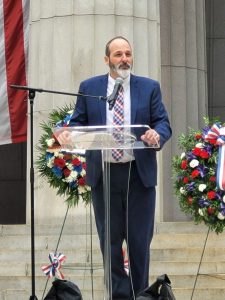 Throughout the tour, Grant met monarchs, emperors, military leaders and political officials across multiple continents. Rather than aggressively promoting American interests, Picone explained that Grant often focused on maintaining peace and stability between nations.
One of the book’s most significant examples centers on tensions between China and Japan over disputed territory. Picone explained that Grant deliberately listened to both sides before offering advice and eventually helped reduce tensions between the two countries. He explained that Grant understood “I’m going to get a different side when I go to Japan,” demonstrating the former president’s awareness of the delicate diplomacy involved in the situation.
Picone’s research also examines how Grant’s experiences abroad contrasted sharply with many modern portrayals of his presidency and legacy. While Grant is often remembered through simplified narratives centered on political scandal or personal shortcomings, Picone argues that the overwhelming admiration Grant received internationally paints a far more complicated picture. In many countries, Grant symbolized liberty and democratic government, particularly in monarchies where representative institutions remained limited. Picone even compared Grant’s status during that period to George Washington, arguing that Grant had risen above partisan politics in the eyes of many Americans and foreign observers alike.
The book additionally connects Grant’s travels to his continuing concern for racial justice in the United States during Reconstruction. Picone noted that Grant remained deeply troubled by the treatment of Black Americans in the South and the rise of white supremacist violence after the Civil War. He suggested Grant’s concern for protecting Black citizens influenced his later interest in another presidential campaign. Picone argued that “a century of Jim Crow laws and segregation might not have happened under a third Grant term” because Grant “desperately cared about Black Americans in the South.”
That lingering political possibility becomes one of the book’s major themes. Picone said Grant returned home from the tour with expanded international relationships and a broader understanding of global affairs. However, Grant ultimately failed to regain the presidency, limiting the long-term political impact of the connections he developed overseas. Reflecting on that possibility, Picone questioned “how would world history have been different if Grant had won the presidency?” suggesting that many of the relationships and ideas developed during the tour were never fully utilized after Grant’s political defeat.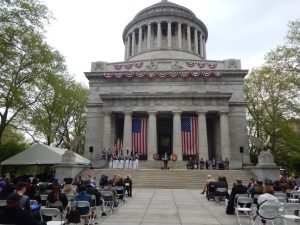
Picone continues to contribute to William Paterson University’s growing academic and literary presence with his latest release. Faculty and alumni book releases like his own represent the kind of William Paterson success story that highlights the university’s contributions to scholarship and tatical methods beyond the classroom.
Ultimately, Ulysses’s Odyssey presents Grant as more than a Civil War general or former president. Through Picone’s research, Grant emerges as an early global diplomat whose travels helped shape international perceptions of the United States at a moment when the nation was beginning to establish itself as a rising world power.
You can acquire Ulysses’s Odyssey: Ulysses S. Grant’s World Tour at the Dawn of American Empire on Amazon, either via Kindle, Hardcover or Audiobook.