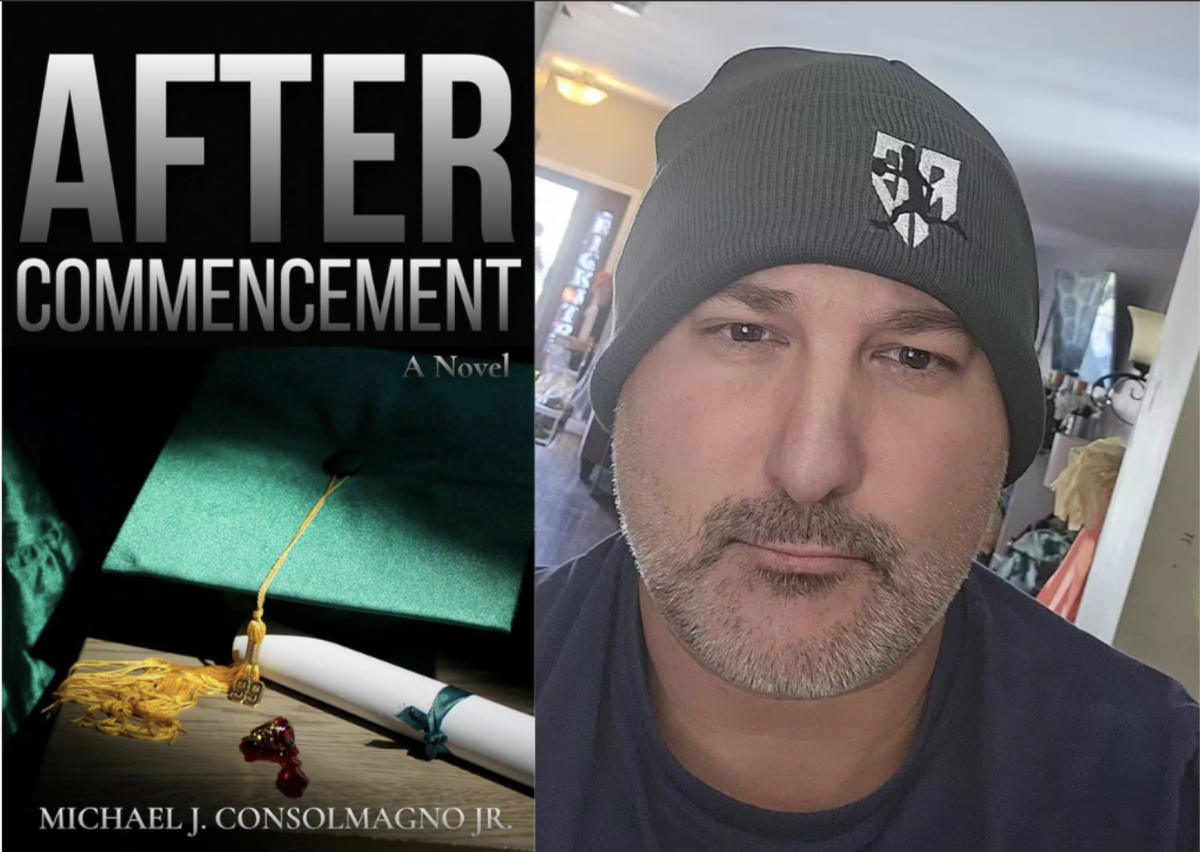
On June 9, Michael J. Consolmagno Jr. will release his debut novel, After Commencement, a coming-of-age story centered on family, identity and the uncertainty that can follow graduation. Set in 1999, the novel follows Joseph Vitagliano as he returns home to Staten Island after attending college across the country, only to realize that while home may look the same, the people and relationships around him have changed.
I recently spoke with Consolmagno about the novel, the personal experiences that inspired it and what he hopes readers will take from the story.
Consolmagno said the idea for the book came from his own difficult transition after college. He explained that he believed he had done everything he was supposed to do, worked hard, studied seriously and followed the path that should have led to success, but still felt uncertain once he returned home.
“I thought I did everything right, and I tried to live a certain way,” Consolmagno said. “I tried to study hard. I tried to be what I thought was a good person, and you meet all these benchmarks in life. You always have this goal to get to, and I found myself lost. I found myself at a place where I was like, maybe everything I did was wrong.”
He said those feelings made him question whether he should have approached life differently, whether he should have been less serious, stayed closer to home or chosen another direction. Over time, he realized those doubts were not unique to him.
“I now have nieces and nephews coming into their own in their 20s, and I kind of see that this feeling of loss was not unique to me,” he said. “They did everything right. They are good kids, and they are still looking at their lives and going, what now?”
That realization became the emotional center of After Commencement. Consolmagno said he wanted the novel to explore what many call a quarter-life crisis, the stage when someone reaches adulthood and must reconcile the choices that brought them there.
Rather than treating graduation as the end of a journey, he said the book focuses on what happens after the celebration ends and real life begins.
Consolmagno’s own career path also shaped the story. Before working in film and television, he worked as a chemist for a pharmaceutical company in Union. He said creativity had always been part of his life, but for years it felt secondary to more traditional career expectations.
“I always loved the arts,” Consolmagno said. “When I was a child, I used to act. I used to do plays. My dad is a musician, so I grew up in an artistic family, but it was also very much, that is a side project. You do not make that your career kind of thing.”
He said the novel first existed as a screenplay, and his work in film influenced how he eventually wrote the book. Consolmagno described the story as cinematic, with shifting viewpoints that resemble a camera moving between characters.
“The way the book is structured, it is written from a third-person narrative, but I also feel like it is a floating camera narrative,” he said. “It shifts viewpoints almost as if you are viewing it from an omnipresent camera.”
Family and friendship are at the heart of the novel, especially the ways men communicate support and loyalty. Consolmagno said those relationships were essential in helping him through challenging periods of his own life.
“I am nothing without my family and my relationships,” he said. “I have strong ties to my brothers. I have strong ties to my family. The friends I do have, I have learned that if you have one good friend in life, you have won.”
He said male friendships are often misunderstood because they are not always expressed through open emotional conversations. Instead, care is often shown through humor, honesty and presence.
“Making fun of each other is the type of love that young guys give to each other,” Consolmagno said. “Sometimes it is just sitting next to somebody after a rough situation and knowing they are there in that silence. Sometimes it is busting balls and giving your friend a joke, but knowing they heard you and they care.”
That emotional realism appears throughout Joseph’s story as he reconnects with friends and family while trying to understand his place in the world.
One of the strongest themes in the novel is the shock of returning home and discovering that life continued without you. Joseph comes back expecting familiarity, but instead finds that his brothers and the people around him have grown in ways he did not anticipate.
Consolmagno said that experience reflects real life. He explained that people often stay frozen in memory, especially family members.
“When you step outside your circle, people, even though they are changing, they stay frozen in your mind,” he said. “So when you come back, those changes hit hard, because mentally you know it happened, but emotionally you do not realize it until you are standing in front of it.”
He compared it to seeing someone after months apart and suddenly noticing all the gradual changes that happened while you were gone.
Some of the book’s most dramatic scenes were inspired by real events. Consolmagno said the climactic brawl in the novel was based on something that truly happened, though he actually softened it for the sake of the story.
“That brawl did happen, and it was something we should not have walked away from,” he said. “True life is stranger than fiction. If I wrote exactly what happened, it would have jarred so much with the rest of the story that readers might not have believed it.”
He said the opening chapter, the climax and several scenes involving college struggles are rooted most directly in his own life, while much of the rest of the novel blends memories, family stories and fiction.
Consolmagno also reflected on what he hopes younger readers, including his own children, gain from the book. Now a father, he said he wants them to understand that uncertainty after college is normal and does not mean failure.
“It is okay to have these emotions, and it is okay to question yourself,” he said. “It is okay to be a little lost. It does not mean it is over.”
He added that questioning your choices can be valuable because it helps determine whether those decisions were honest and truly your own.
The title After Commencement carries a double meaning. While commencement ceremonies are often viewed as endings, Consolmagno said they are really beginnings.
“College is the starting line,” he said. “A lot of what I thought was college as an ending. No. That is all prelude to the start of your life. Your life starts now.”
Looking ahead, Consolmagno said he plans to continue writing and sees this novel as the beginning of a larger thematic trilogy. He said the next book would examine midlife crisis through horror, while a third would explore the end of life through romance. Though not direct sequels, he said the books would be connected through themes of identity, reflection and change.
“After Commencement” will be everywhere on June 9. Print versions are set to be ready for pre-order in early May. You can pick up your own copy at Barnes & Noble, Walmart, and Amazon.