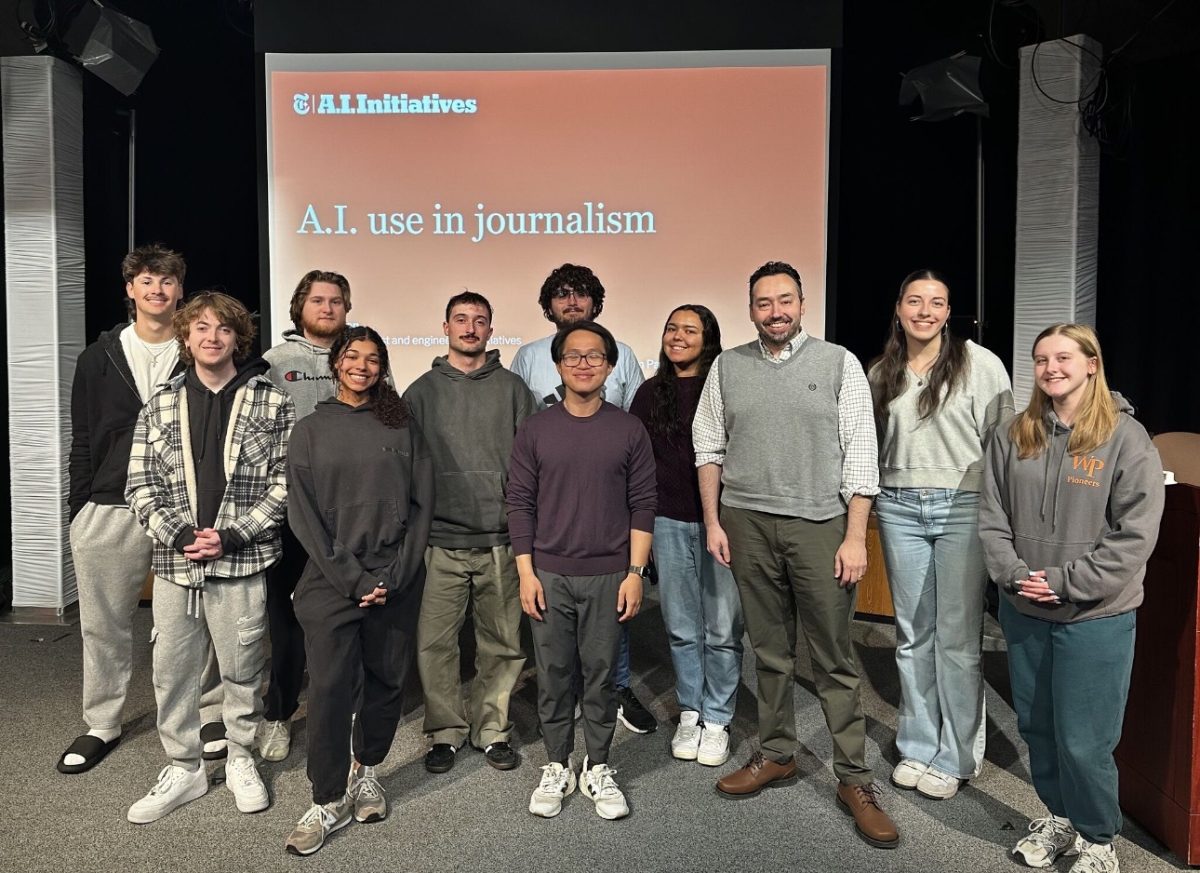
Daniel Rosen came into Dr. Hirshon’s advanced reporting class prepared to tell communication students how to play offense.
Rosen is a New York Sun senior investigative reporter, covering federal law enforcement, the FBI, the NYPD, and the U.S Department of Health and Human Services (HHS).
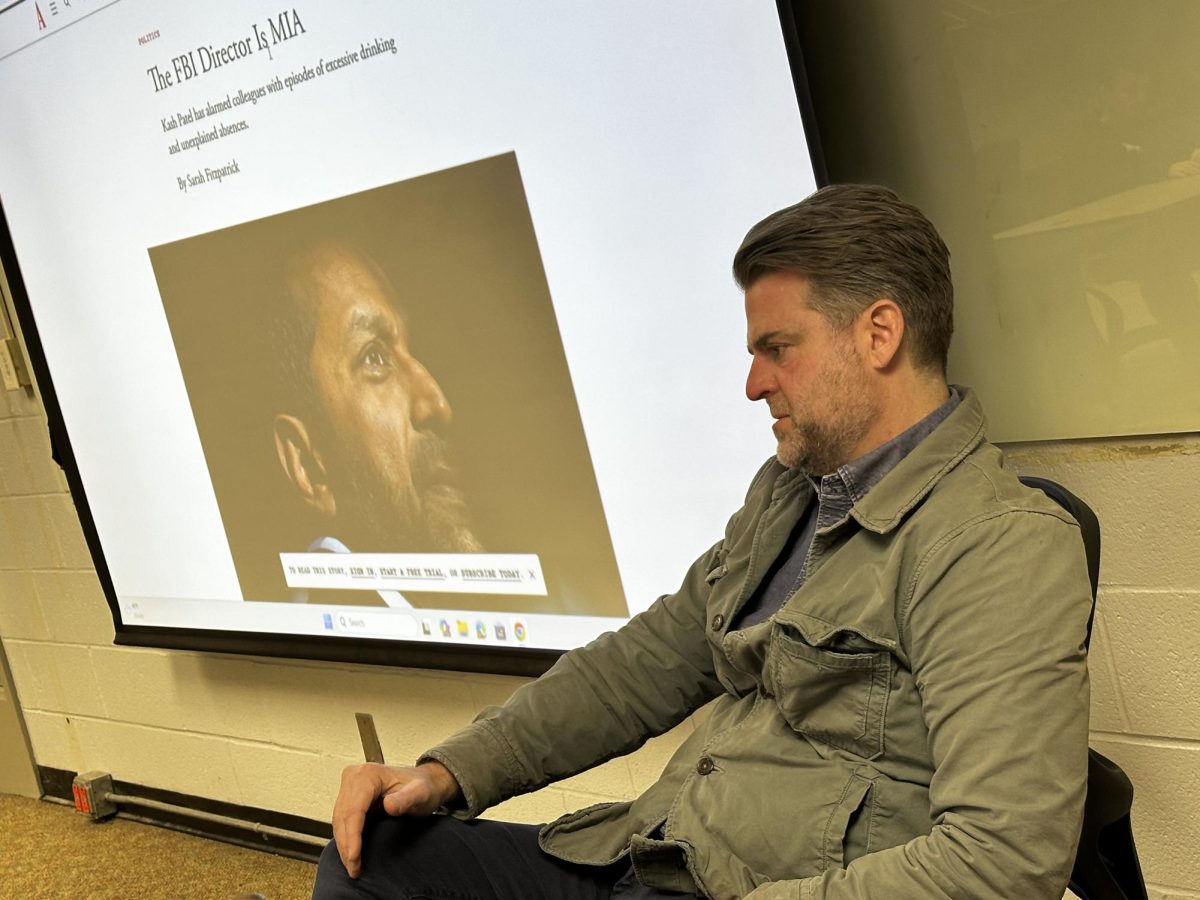
Rosen used a recent article from The Atlantic on FBI Director Kash Patel’s questionable behavior to illustrate, in real time, how reporters make critical judgment calls, balancing publishable investigations and legal risks.
He also shared the FBI’s response and Patel’s attorney’s demand letter, adding perspective to the article.
The Atlantic sent 19 allegations to the FBI, listing claims about Patel’s conduct, such as drinking “to the point of obvious intoxication” on multiple occasions, erratic behavior, and reduced engagement with the job, said Rosen. Patel responded with a $250 million defamation lawsuit against the magazine.
The decision Rosen often returned to was that the Atlantic reporter had given the FBI only 111 minutes to respond to all 19 allegations before publication.
“I would have given them at least four hours. They still would have been too tight.” He added that Patel’s complaint itself contained what he counted as 19 spelling errors.
Rosen criticized the window, but acknowledged their reasoning: The Atlantic, in his view, was trying to walk the tightrope between giving a subject a fair amount of time to curate a response and the risk of being scooped on its own reporting. He emphasized that, while some stories need time, reporters must stay aware of tips that spread to other sources.
He offered his own recent experiences as a cautionary tale. Rosen had been chasing an exclusive about how the FBI had quietly lowered the testing requirements for support staff to become agents and had sent it to Ben Williamson, an FBI spokesperson who handles press inquiries about Patel and the bureau. He said he “then waited [and] waited. Didn’t hear back. It was like eight hours. I told my editors I wasn’t going to post it yet. And then Reuters had a story.”
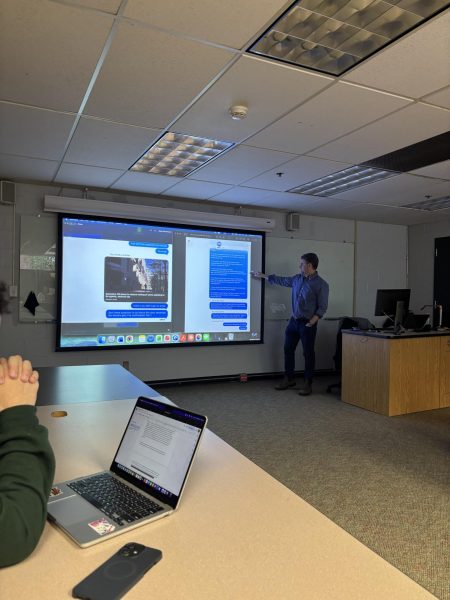
Rosen explained he needed to act quickly but carefully, “Kash practices law, and he’ll sue if anything’s defamatory,” he said.
He cited Frank Figliuzzi, a former FBI assistant director and MSNBC contributor, who remarked that “Patel spent more time in nightclubs than at the Hoover Building”.
Patel’s defamation suit against Figliuzzi was dismissed; the remark was protected hyperbole.
“You have to have your ducks in a row,” Rosen said. “It can be very expensive.”
Rosen framed the reporter’s job the way a coach might, offense versus defense. Institutions like government offices and PR firms play defense as they work to control the narrative. Reporters are always playing offense.
For the second half of the class, Rosen guided students through the resources he uses on nearly every story.
CourtListener, a free federal court filings database, is Rosen’s first stop for lawsuits. He pulled up Patel’s case against The Atlantic. Furthermore, Rosen said he could not “stress enough” how valuable LinkedIn can be. He urged students to look up former officers or members of any organization they cover and work backward.
Next was LexisNexis, proposed by Dr. Hirshon. The site is available through William Paterson’s library, making it a useful starting point whenever an article is paywalled or students need access to archival reporting.
Rosen also spoke to the ethical side of reporting, recalling his early days as a Newsday stringer covering homicides. These stories helped him develop a careful approach to families in sensitive cases.
“It takes a tremendous amount of tact,” he said. “You’re interacting with people at the worst moment of their lives. As reporters, you have to be deft and gentle.”
On anonymous sources, Rosen said that if the New York Sun is sued over a story, the paper will not protect an anonymous source in court. He cautioned students to use them sparingly and only with corroborating documentation.
The class ended where it began, as Rosen answered students’ questions about students’ beats for the semester, covering different student organizations and where their struggles lie. His advice stayed the same, emphasizing the importance of being fast but careful. It isn’t journalists’ jobs to shape the narrative; it is to report it accurately, ethically, and honestly.