
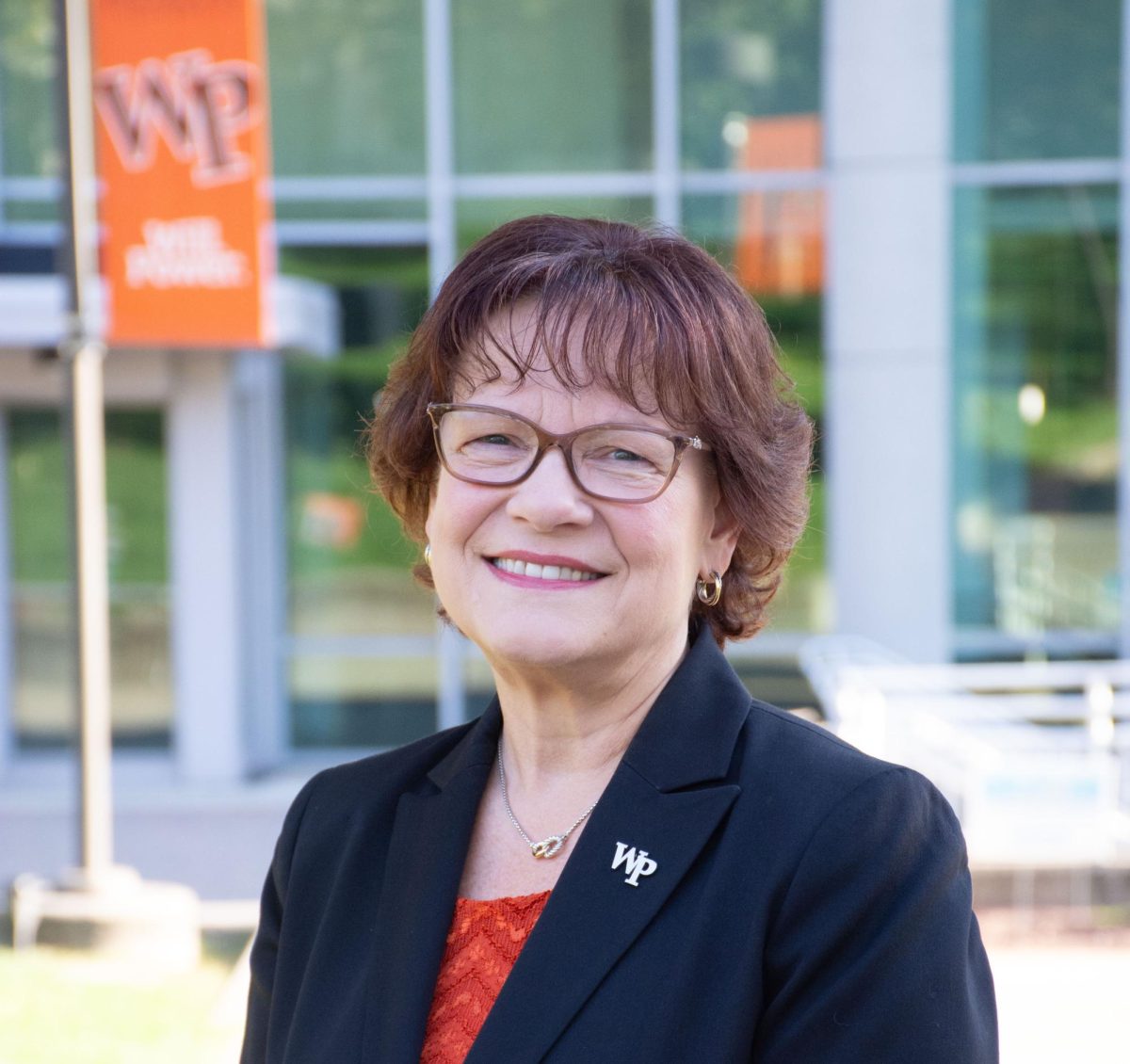
Dr. Mikki Cammarata, vice president of student development at William Paterson, is retiring after 12 years. The division’s student development mission is to support students, expanding their resources in and out of the classroom.
President Helldobler has since launched a search to identify Dr. Cammarata’s successor. This process includes conducting listening sessions with the student development division and students to identify finalists by late March or early April, and appointing the next vice president in May.
At William Paterson, she has implemented resources on campus and lowered food insecurity for students.
“It’s easier to do hard work when you enjoy it and believe in the product,” Dr. Cammarata said, emphasizing that she can’t imagine working in a field “that you’re not sort of interacting with humans and seeing them grow and develop, as a result of that.”
Dr. Cammarata teamed up with student groups and campus departments and used data from the HOPE Survey, which measures student need, to help create the Pioneer Pantry. Basically, the food pantry gives out canned food, pasta, rice, and other non-perishable foods, along with some fresh items when they have them. They also offer non-food essentials, like hygiene products, household items, and cleaning supplies. The pantry is located next to the Student Center.
As stated on the Pioneer Pantry website, they are funded by the William Paterson University community, including students, alumni, families, and staff, and also support from the Student Government Association. Additionally, Dr. Cammarata partnered up with the career center to establish the Career Closet. Also located in the Student Center, in room 301, the Career Closet is a resource that provides free business attire, including suits, dresses, and accessories, to help students feel confident for internships, interviews, conferences, and more.
Before leaving the pantry, Caleb Rippey, senior, addressed that he’s “an independent student athlete working two jobs, and even though their hours aren’t exactly great for someone with my schedule, when things got rough, I knew I could always come here. It’s a great addition to our food resources on campus.”
While the university has seen measurable progress, Dr. Cammarata stressed that the work is ongoing. “I’m not taking my foot off the gas,” she said.
Dr. Cammarata stated that it was 10 years ago when she noticed “a cognitive dissonance around, you can be in college, but you could also be food insecure. It’s both the lack of good quality, nutritious food and simply worrying about where the next meal will come from. You might get one, but it’s not a secure feeling for you and disrupts how you do everything else.”
Dr. Cammarata said that while “the proportion of students who have needs and who are getting that need met has grown, it’s not enough, it’s never enough. But it’s grown.”
Her love for student affairs began when she was in college herself at The College of New Jersey.
“I was somebody who didn’t have a lot of support networks when I went to college, and I was essentially going through, going on scholarship, financial aid, and money I could make myself. And early mentors made a big difference for me and my college experience,” she said.
On top of her work in higher education, Dr. Cammarata served on the board of directors of the Girl Scouts of Bergen County, alongside volunteer work at Habitat for Humanity, Shelter for Our Sisters, and the Wayne Food Bank.
Fast-forward to the present day, Dr. Cammarata uses her own experiences and knowledge of today’s student perspectives to help shape their college lives for the better.
She grounded her work on student feedback gathered through campus surveys and student conversations. Dr. Cammarata helped launch Will. Power. 101 and 102 in the wake of COVID. William Paterson has seen steady improvement in keeping students enrolled and helping them graduate. According to the university’s Institutional Effectiveness data on student achievements, the one-year retention rate rose from 67.5% in 2020 to 75% in 2025, showing that more students are staying after their first year. At the same time, the number of undergraduate degrees awarded increased from 1,761 in the 2020–21 academic year to 2,406 in 2025. Graduate programs also grew, with 619 more graduate certificates awarded between 2021 and 2024–25 and 20 additional doctoral degrees earned compared to 2020–21.
The first-year seminar sequence was designed to help students navigate the realities of college life, from academic to campus resources, at a time when many were struggling to gain their footing.
For Dr. Cammarata, growth begins with listening. Her advice is to “be a sponge and take it in, seek to know and understand.”
Through that process, she learned that while faculty serve as “great mentors” and “outstanding advisors,” students were asking for something more consistent.
Dr. Cammarata also listened closely to students who were frustrated by the limited diversity and identity-based spaces on campus, centers meant to support students based on their cultural backgrounds and lived experiences. While the university first created a multicultural center to respond, “it quickly became evident students didn’t want to be lumped together,” she said, recalling a student who told her, “we’re asking for steak, and you’re giving us chicken.” In response, students played a direct role in creating the Center for Diversity and Inclusion, along with the Black Cultural Center and the Center for Latinidad, dedicated spaces that allow students to define and celebrate their identities on their own terms, ensuring they were not only listened to but truly heard.
In a message sent to students regarding Dr. Cammarata’s retirement, on Jan. 28, President Helldobler stated that “she is a reliable presence in student life on campus, always asking students how they are doing and how she can help.”
“I’m student-centered, not student-focused,” said Dr. Cammarata, distinguishing responding to student requests in the moment and intentionally designing policies, resources, and support systems that prioritize students’ overall well-being and success.
“In the student-centered approach, the student is in the center, and we are around that student, thinking about that student and what we can do for the student,” she said. “Do I always get it right? No. Am I tone deaf at times? Yes. I’m white, I’m privileged and less connected to the students’ experience now, but I make sure I continue to hold myself accountable, read, and understand.”
As the semester continues, Dr. Cammarata said she is “working to really think about what more we can do to enhance the residential experience” for students.
In her final months at the university, Dr. Cammarata plans to focus on strengthening enforcement of smoking and marijuana policies, investing in faculty and staffing, and addressing long-standing concerns tied to aging campus buildings. Although many of these initiatives extend beyond her tenure, she claims that her commitment to students remains unchanged.
In announcing her retirement, President Helldobler cited her institutional work, including her “ability to both address problems within existing systems and build new enterprises from the ground up.”
Dr. Cammarata acknowledged she will deeply miss working with students and being immersed in campus life, but emphasized that listening should be the foundation for whoever steps into her role next.






Dr. Rose Mary Howell • Feb 7, 2026 at 8:51 am
Excellent article!