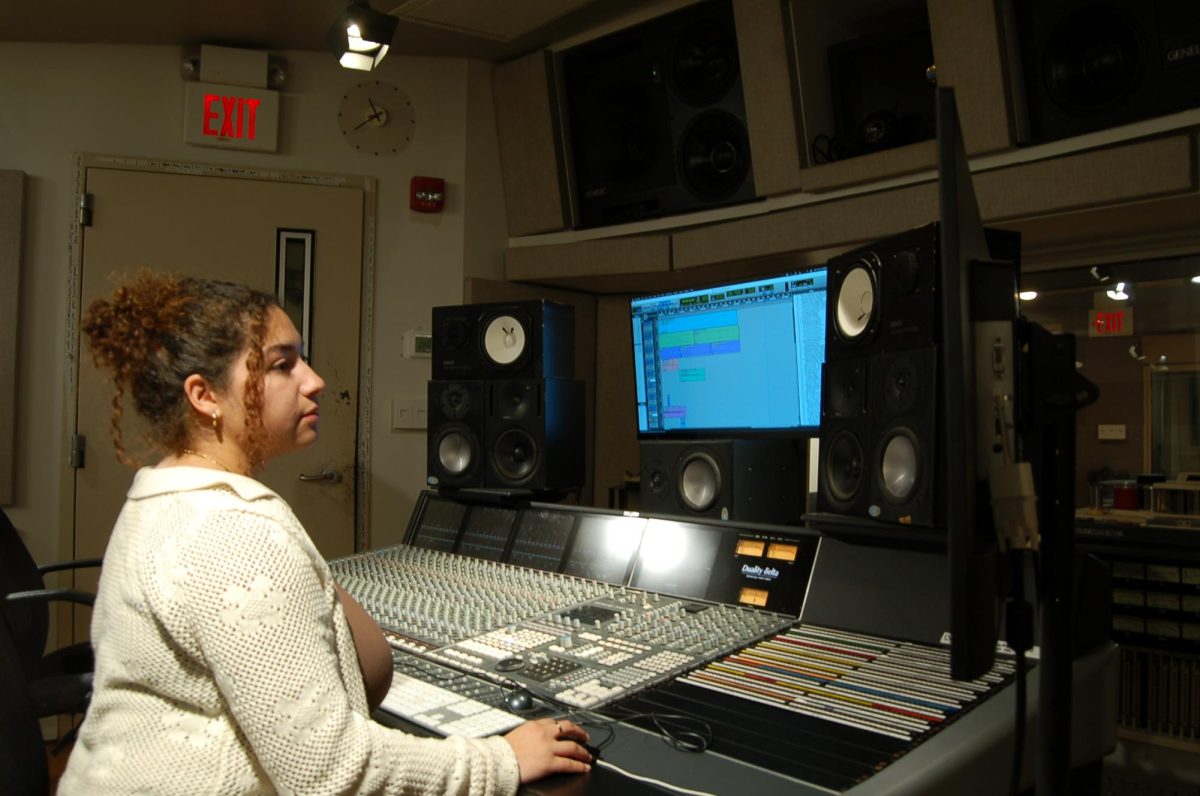
Two years ago, Shayla Montero (‘27) felt directionless, and certainly not in the happy-go-lucky way a college freshman might typically feel. She knew from as long as she could remember that something to do with music was her calling, and if it wouldn’t work out, she’d go into the Marines. With a liking for playing around in recording software, the Sound Engineering Arts (SEA) major called out to her. She, as well as just about all her other peers, would have to fight hard to hear exactly what that call meant.
“Coming into my first semester, I was lost. There was no sense of structure or who my director was, I just knew I was the type of person who wanted to get in and get my hands on [everything] and start learning things, but I didn’t end up having any SEA classes until my sophomore year. During that time I just got my feet wet and [met] people on my own because the university wasn’t bringing me anybody. They weren’t looking for me, it was me looking for everybody else. I built connections, and then with the transition from not having a director to the dependency on the adjuncts and asking them and the upperclassmen questions, I started to see it was really us; it was really the students running how the program goes.”
As Montero would echo, directionless is an understatement. With an unlucky streak of potential directors not committing for the long-term since the first director, Dave Kerzner, left in 2021, the SEA students faced a years-long period of trials: microphones getting stolen, equipment breaking, and a presence of mold in the only studio in Shea preventing usage for a period in the Fall 2024 semester are just a few morale-lowering setbacks of too many to name. In addition to physical problems in the studio, some students reported feeling anxious that they would not graduate on time from a lack of accurate guidance.
While full-time professors of other areas in the music department would step up to advise in multiple ways, Montero remarked, “You can’t expect those professors and those advisors to give you the help that you need, because they don’t know what it’s like in your field…. Last year [SEA adjunct professor] Frank Fagnano kind of took over, but it’s hard because there is only so much an adjunct can do. They don’t get paid enough and they don’t have much time and we can’t hold them liable for being here and doing director things they are not getting paid to do. They help so much through the grace in their heart but at the end of the day, we have to survive.”
Lasse Corson (‘25), a graduate of the SEA program, shared a similar sentiment. “My first year in the SEA program without a director was okay because of the upperclassmen, but after that it was like everyone was running around like a chicken with its head cut off… Frank was really nice and did the best he could without even being the director, but there is a whole administrative side of the job that the right person has to have a passion for.”
Determined to keep themselves afloat, the SEA students turned to relying on each other. As a sophomore, Montero recalls Christian Leitner (‘25) and Tim Leonard (‘26) reviving practices that the department used to function off of even when it had a director: holding weekly meetings with SEA majors, re-establishing a board of student directors, and implementing a role of “Desk Monitor” (students who would be responsible for shadowing newcomers and locking up equipment after recording sessions, for better security purposes). Additionally, the two of them collaborated on reviving a unique social media presence for the department, which Montero hopes will encourage more department integration between music students and students interested in other forms of media production, too.
“We have so many talented students, we have so many great departments, like the radio station… I heard that the pop majors had to make a song or record something and it’s like, well, why don’t they come in here? Why don’t they have a desired producer that they want to work with and it’s your job to work together, to make this band or album come alive? Those are the things that I would love to see.”
To help department integration efforts, Montero has started involvement with Brave New Radio, the award-winning campus radio station, an effort inspired by SEA sophomore Isabella Disano (‘28), who has been involved at the station since her freshman year and currently serves as assistant programming director.
“I knew that learning at the station could help me out from a sound engineering aspect in the way that the sounds, boards, and even how the signal transfers crosses over with SEA,” Disano said of her involvement at Brave New Radio.
Even with a growing presence of music students in music-adjacent realms such as radio, Montero has found that many students – SEA students included – have not yet discovered their true calling in the industry. “A lot of people don’t know what sound engineers do, but this is such a versatile space. You can do anything. You can do music production and sit in a studio seat; you can do live sound; you can do post-production for movies, and that is where my head is at, that I just want to try everything,” she said.
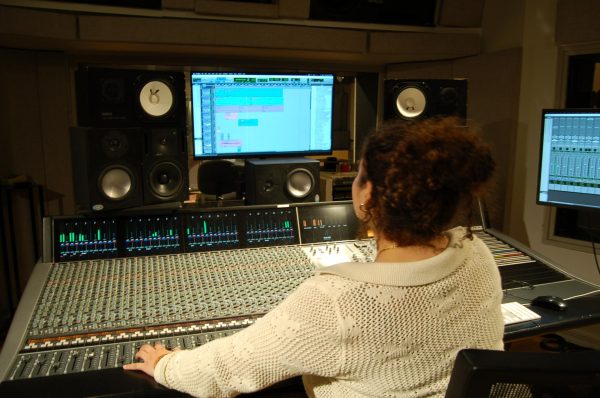
Montero anticipates that more SEA students will finally be able to once again receive guidance in trying to expand their career opportunities with the help of new program director, William Paterson SEA alum, Phil Clifford (‘09), who described the opportunity to return as director this past semester “surreal”. As he adjusts, and even beyond, the students plan to continue their efforts of leading the program, having already begun to collaborate with Clifford on ideas of improving the program even further.
Senior Tim Leonard describes, “As SEA president, I think efforts like building a social media presence, holding weekly meetings, and establishing a board are going to have a big impact on how the program develops in the future. Those kinds of things make it easier for students to feel connected and invested, even if they feel new. When people see that there are consistent meetings, leadership roles, and projects being shared publicly, it creates a sense of pride and belonging. It turns the program into more than just a class or an academic experience, it becomes a community where students can contribute, lead, and help shape what comes next.”
With a stint of rough semesters behind them, the Sound Engineering Arts students will continue to model what it really means to be an active part in shaping their future by undertaking responsibilities for the greater good. Reflecting on the hardships, Montero remarks that in having to work with her peers to create a sense of guidance, she has “found herself”.
“My goal is to advocate for myself, for the department, and just help those that are in the place that I was in [when I first got here]. I think now we are starting to have a better sense of structure and organization, which is, yes, in part to the changes going on, but I think it’s also getting everyone involved. We should be putting everyone in [the studio] sooner. I want to build more of a spotlight on the great program that we have here and the tools that we have. I know that by the time I graduate, things will be in a way better place here than when I came in. And as much as you can take that in a way as ‘Oh, that sucks, I would want the best for yourself’, I don’t really feel that way. I feel a sense that if I can leave this place better than I found it, then I’m doing my job. I’m doing the right thing not just as the vice president or someone that holds a position, but a person that is a part of the program, that is part of the university.”