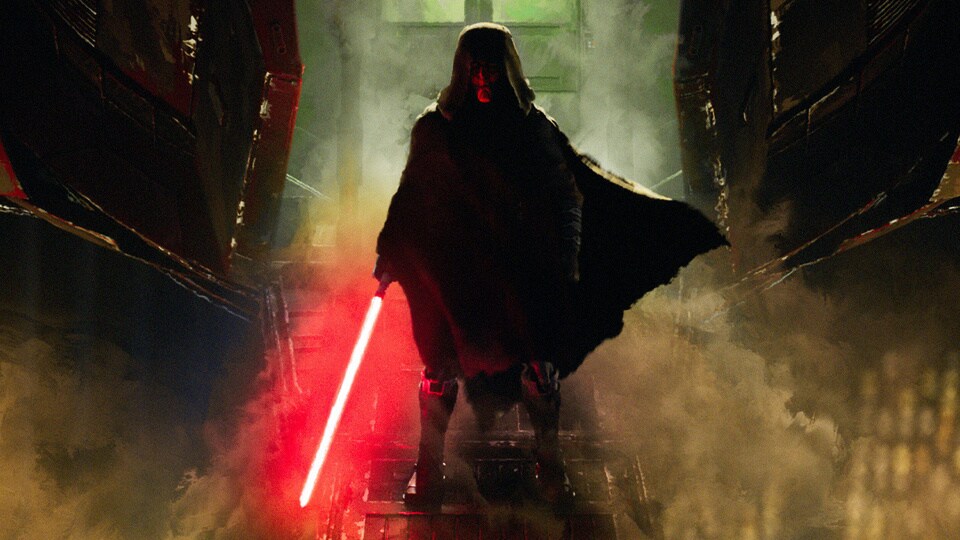
It has been 27 years since his introduction and nine years since his last appearance on the screen, but Maul is back and more ruthless than ever in this new series produced by Dave Filoni. Though the series took a misstep or two, it has granted audiences with great writing and stellar visuals. Maul has had a long history in the Star Wars franchise, from being split in half to losing his brother to becoming an independent criminal mastermind, which is where we find him in “Maul: Shadow Lord”.
Story
“Maul: Shadow Lord” follows Maul on the planet Janix, leading a team of faithful Mandalorians and Zabraks. Maul is seeking vengeance against those who betrayed him, from criminals to his old master, Darth Sidious. Despite being a foreboding figure, we do see Maul get into compromising scenarios, seeing him scared and reflective. Of course, a character as strong as Maul needs stronger opponents. Maul must face the might of the Empire, as well as the combined power of two Inquisitors, Jedi hunters. Maul truly meets his match with the intimidating might of the First Brother and Eleventh Brother.
On Janix, we also meet two Jedi on the run, trapped on the planet in the midst of the chaos. Having survived the infamous Order 66, the Jedi Eeko-Dio Daki and his padawan Devon Izara have managed to get by on Janix. While Daki has had much experience with the Jedi and their peaceful way, Izara is more impressionable. This dynamic adds some tension as to whether Izara will stay on the light side of the force or yield to the dark side.
Lastly, there is the story of Janix’s Tactical Defense Force captain, Brander Lawson. Lawson investigates criminal happenings on Janix with his partner Two-Boots, who disagrees with Lawson’s anti-empire sentiments. Lawson struggles to maintain a stable relationship with his son while also dealing with the criminal underworld on Janix, creating some compelling plot points.
Aesthetics
The only thing more important than a story is the visual and audio elements that bring it together. “Maul: Shadow Lord” ties all of it together with a unique visual style and great use of audio elements. What stood out to me more than the great usage of audio was the series unique art style. Somewhat akin to “The Wild Robot”, the series opts for a paint-like aesthetic while maintaining the art style established in “Star Wars: The Clone Wars”. The series also takes notes from modern animation, utilizing frame drops to make moments more dramatic.
Loyalty
“Maul: Shadow Lord” has a central underlying theme surrounding loyalty and blind allegiance. This theme is reflected across all three of the first season’s central storylines. Within Maul’s storyline, we see his ever-faithful allegiance wane in their loyalty as Maul repeatedly reassures them that everything is part of a larger plan. Jedi Eeko-Dio Daki puts his loyalty in the force and the goodwill of other people. While his padawan Devon Izara is loyal to her master, she does not show as much loyalty to the ways of the Jedi nor the light side of the force.
The theme of loyalty and blind allegiance is most evident in the dynamic between Brander Lawson and his partner Two-Boots. Lawson places his loyalty among the city he protects and his family. While Two-Boots agrees with his views, he does hold some blind allegiance to the Empire, which he believes means well. This sparks an interesting clash between Lawson’s disdain for the Empire versus Two-Boots’ blind allegiance to the Empire.
What’s In Store
Now available in its entirety on Disney+, “Maul: Shadow Lord” is currently the highest-rated Star Wars show on IMDb. This places it on par with “Star Wars: Episode V – The Empire Strikes Back”. Dave Filoni has taken his experience producing previous Star Wars series to create a stellar series that leaves fans wanting more. The series was renewed for a second season with hopes from its creators to surpass three seasons.