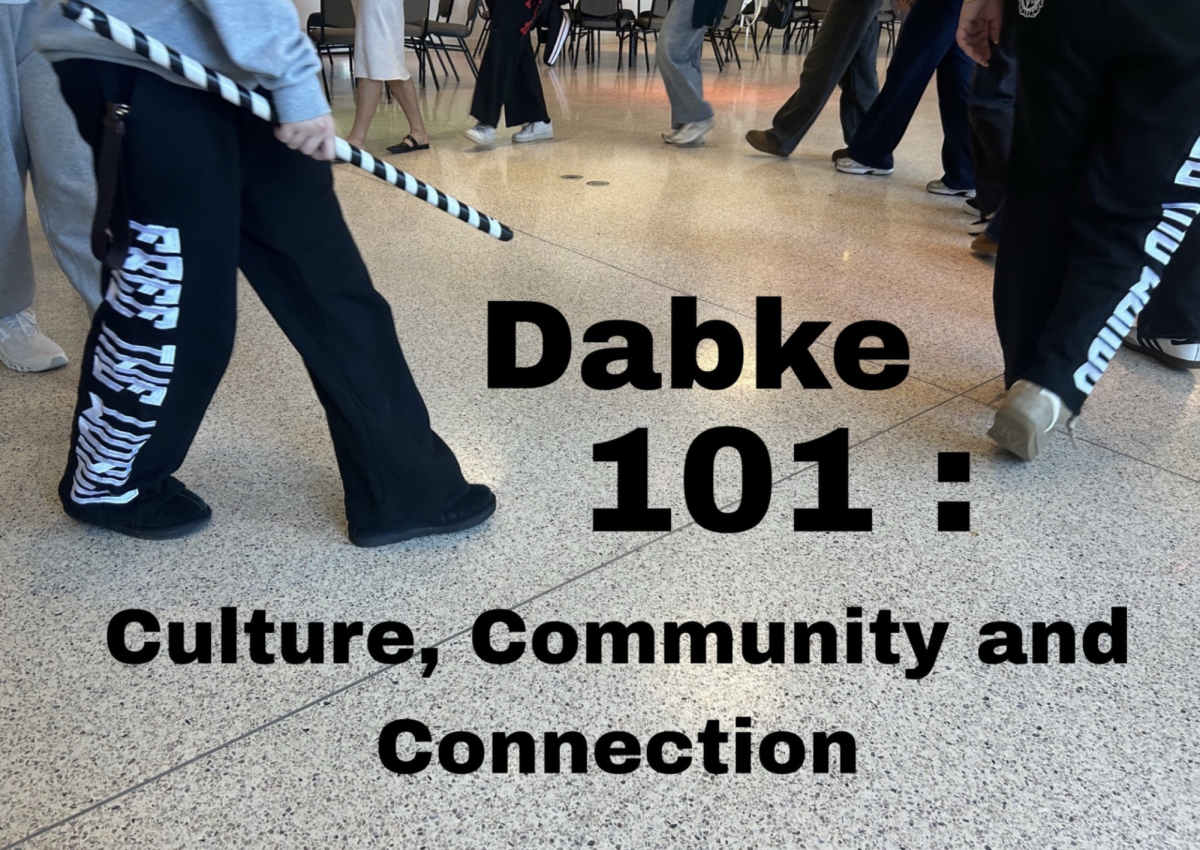
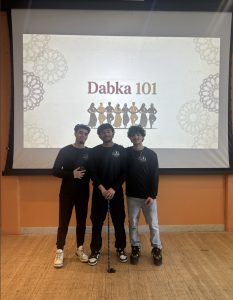
If you were near the student center’s multipurpose room on April 9, you would have certainly heard the energetic clamor of stomps and music coming from within. There, students were able to take part in “Dabke 101,” an event introducing participants to the traditional Levantine dance known as dabke. The class, led by William Paterson’s Students for Justice in Palestine division and the Center for Student Diversity and Inclusion, amounted to a highly successful and meaningful opportunity for cultural expression and connection.
For those unfamiliar, dabke is a traditional folk dance rooted in countries across the Levant, including Lebanon, Syria, Jordan and Palestine. According to the organizers of Dabke 101, the dance’s origins trace back thousands of years. Levantine villagers, in the process of creating mud roofs for their homes, would hold hands and stomp their feet in order to pack the mud into place. This task, since then, has developed into what we know today as dabke, which translates from Arabic to “stomping of feet,” a nod to its origins and a reflection of the dance’s powerful movements. In recent times, however, dabke has taken on an even deeper meaning.
Today, dabke continues to carry deep cultural significance. One event organizer, the vice president of William Paterson’s SJP, described dabke as more than just a dance. “Dabke proves Palestinians have been here for thousands of years,” he said. Having danced dabke since he was 5 years old, he stressed how important it is to “pass it down to future generations,” as it provides a special hope for the survival of Palestinian culture. Learning and performing dabke proves to be a deep honor and responsibility, providing a way to show peaceful resistance to a world trying to silence Palestinian voices by, in his words, “letting the feet do the talking.”
Other organizers and participants echoed this powerful sentiment, emphasizing the importance of cultural preservation. Two members of a women’s dabke team called Al Awda, meaning “to return,” described the dance as a symbol of identity. “It’s persistent and generational,” they explained. “It’s a remembrance of where Palestinians come from.” They also highlighted how the dance carries a warm, communal aspect, fostering sisterhood among the members of their dance team and beyond. Dabke’s ability to strengthen communities can even be seen in the way many dance routines were choreographed inside of prisons as a sign of defiance. Each region in Palestine, they added, has its own unique style of dabke, further emphasizing the dance’s richness and diversity.
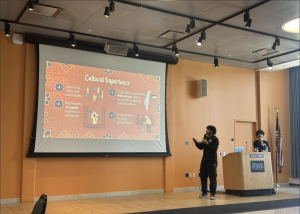
Hosting an event like Dabke 101 on a college campus carries particular significance. For organizers, it represents a chance to educate and engage students from a wide range of backgrounds and upbringings. “College students are the future,” Elnatshe noted, “making it imperative to teach students about dabke,” and with William Paterson’s endlessly diverse student body, being able to include Palestinian culture in the mix is an amazing thing. Events like these, ever-important, create spaces for cultural exchange and understanding.
Participants, many of whom had never experienced dabke before, found the event both engaging and eye-opening. Samir, a senior, said he was most surprised by the historical depth behind dabke. He found it fascinating to learn that each dance remains particular to their specific regions in Palestine, often named after the cities they originated from. Samir also added onto the aspect of fostering community on campus, noting that “it’s best to know our fellow students.” Ja’Shawn Robinson, a junior, came to learn of Dabke 101 in the same way that Samir had. With the Center for Student Diversity and Inclusion having aided in organizing the event, both students came to learn of Dabke 101 through posters put up advertising the dance session. For Robinson, learning how to dance dabke was his favorite part overall. “We can all learn about different backgrounds besides our own,” Robinson reflected, neatly emphasizing the importance of holding such events on campus.
Ultimately, Dabke 101 offered so much more than just a dance class. The organizers helped create a space in which students could come together, learn from one another and engage in a culture that may have been unfamiliar to them just a day before. Dabke 101 highlighted the enduring power of cultural traditions and the importance of keeping them alive, a sentiment so needed not only on diverse college campuses, but in our day to day lives.