On March 8, 2026, I attended an evening performance of Every Brilliant Thing, a one-man show written by Duncan Macmillan and Jonny Donahoe and starring Daniel Radcliffe, best known for playing Harry Potter in the film series. The production encourages audience participation and is running for a limited 13-week engagement at the Hudson Theatre on West 44th Street in New York City.

The Background (Warning: Sensitive
Themes)
The story follows a narrator, played by Radcliffe, beginning at age 7. Early in the story, he is confronted with death for the first time, establishing a somber tone from the outset. Soon after, his mother attempts suicide, prompting him to begin a list of “every brilliant thing” in life, small joys he hopes will help lift her spirits.
The list becomes a recurring thread throughout the story, shaping his relationships with his mother, father and later his wife, while also helping him navigate his own struggles with depression. Over time, the list grows and eventually reaches one million brilliant things.
Why This Show Is Unique
At the beginning of the show, Radcliffe greets audience members while moving throughout the theater, handing out notecards at random. Each card contains a number and a phrase or word representing a “brilliant thing.”
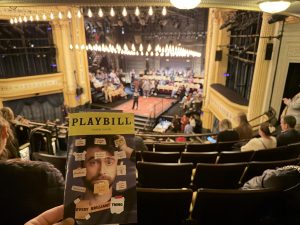
During the performance, when a number is called, the audience member holding that card shouts out the phrase written on it. The process immediately immerses the audience, making them part of the creation of the list. Even if you are not given a card beforehand, there is one printed in every playbill that the entire audience can shout when the number is called.
What makes the performance especially remarkable is that, as a one-man show, Radcliffe also invites audience members to play characters such as his father, a romantic interest, a veterinarian and a therapist. This creates moments of improvisation, but in true show-business fashion, the show must go on, and whatever happens becomes part of the story.
One of my favorite moments came during the therapy scene. The audience member chosen to play the therapist made a sock puppet out of their own sock, as instructed in the scene, to
calm the narrator as a child. Watching them fully commit to the moment while Radcliffe adapted effortlessly made for an incredibly entertaining exchange.
The Stage Door
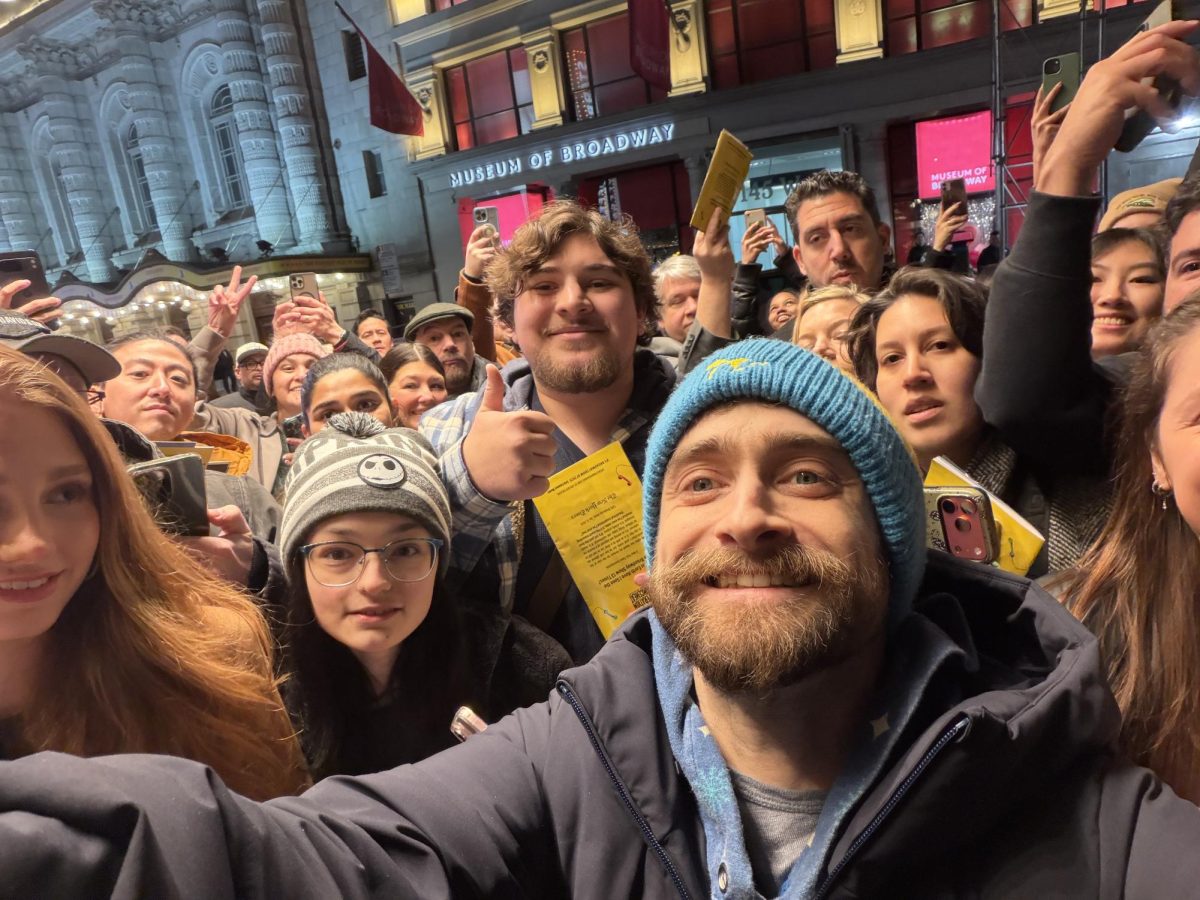
The stage door process for this show was intense. The stage door is located on West 45th Street, the block behind the theater. Fans can reach it quickly by cutting through a neighboring hotel lobby, which has doors connecting to the other street and leads directly beside the stage door.
Because of Radcliffe’s popularity, the line was the largest stage door crowd I have ever seen. After some time, Radcliffe came out and began at one end of the line, greeting fans, taking photos and signing autographs for as many people as he could.
This generosity, something I had never seen to this extent at a stage door before, made the moment stand out even more. When he reached me, I was able to thank him for the performance and mention my appreciation for his film Weird: The Al Yankovic Story. He was attentive and receptive during the interaction, making it a memorable experience.
Overall, this was one of the most beautiful performances I have ever seen. Every Brilliant Thing is a must-see production. Although the story deals with heavy themes, its central message is hopeful: no matter what someone is going through, things can improve if they keep moving forward.
Sometimes, all it takes is looking around and appreciating every brilliant thing.