For William Paterson junior Emma Bernard, the debate over immigration enforcement isn’t just political, it’s personal. Bernard, 20, is a proud Dominican, and even though her grandmother is a resident and has lived in the U.S legally since 2005, Bernard’s family still will not let her grandmother go out alone because they fear what could happen.
As immigration enforcement has increased, fear among Americans, regardless of documentation status, has grown.
“I think about my family all the time,” Bernard said.
Now, Emma can’t help but worry about her walking to the grocery store, in fear that she wouldn’t know how to defend herself against immigration enforcement.
“And the fact that it’s just because we speak Spanish in public or the way we look is dehumanizing,” Bernard said.
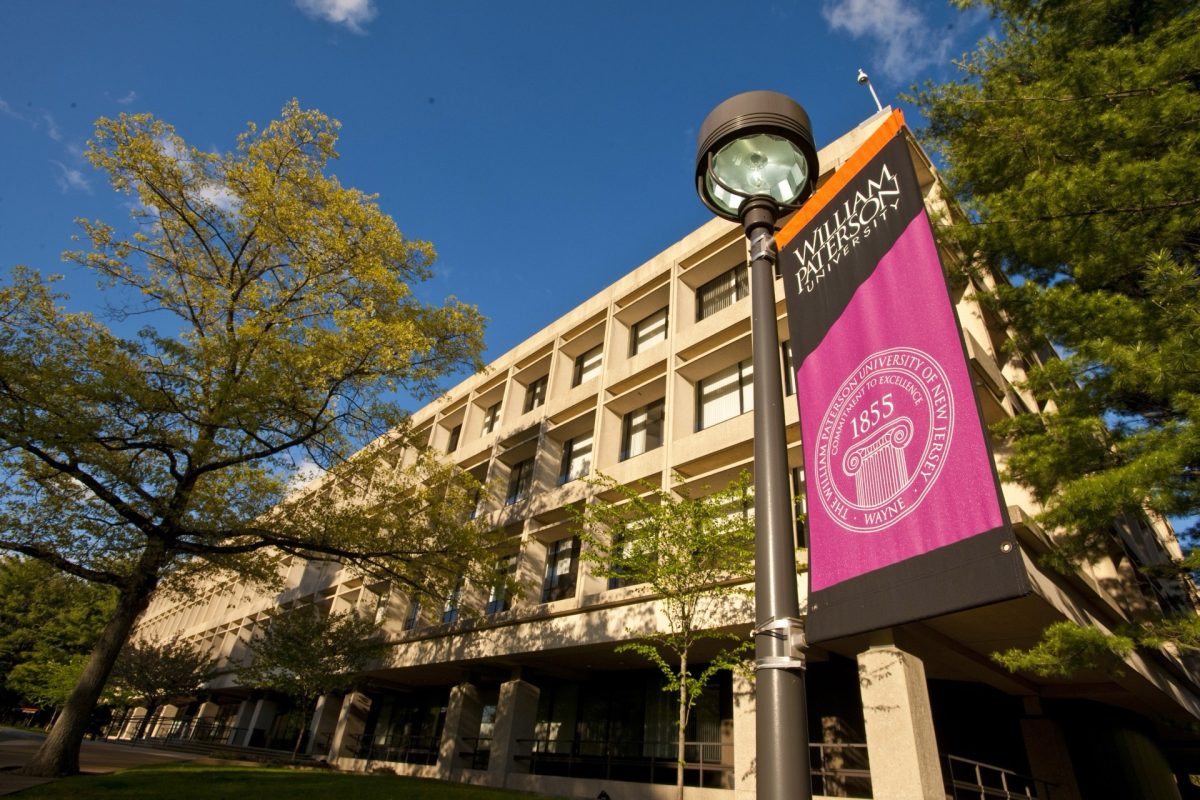
The fears and worries that have begun to impact Bernard’s life reflect broader tensions on a majority-minority campus, like William Paterson, amid ongoing debates over immigration enforcement.
Gov. Mikie Sherrill signed an executive order on Feb. 11 limiting federal immigration agents on state property, intensifying the power struggle between state and federal governments.
The order bars U.S. Immigration and Customs Enforcement agents from entering non-public areas of state-owned facilities without a judicial warrant, a court order signed by a judge authorizing entry, and prohibits the use of state property as staging grounds for civil immigration enforcement operations.
Alongside the executive order, the state also launched new online resources to inform residents and track federal immigration activity. The administration launched a “Know Your Rights” website that outlines legal protections and provides guidance for individuals who may encounter immigration enforcement. The site provides information on what individuals are legally required to do when approached by federal agents, explains when a warrant is required for entry into private spaces, and is available in 22 languages.
In addition to the website, Gov. Sherrill created a public reporting portal for residents to document ICE activity, aiming to help officials monitor compliance with the executive order.
Officials emphasized that the portal does not replace contacting law enforcement or seeking legal assistance.
Federal officials contend the order obstructs immigration enforcement, raising core questions about authority and jurisdiction.
Professor Ryan Rebe, chair of the department of political science, legal, and urban studies, and director of the legal studies and pre-law program, explained that states cannot obstruct federal operations.
On the other hand, “the federal government cannot force state officers to act as federal agents unless there is an agreement with the state,” Rebe said.
Rebe added on to say that the federal government can threaten to withhold funding, using it as leverage over states.
Despite new policies, some students on campus remain concerned about federal immigration enforcement, emphasizing that the issue continues to be discussed.
Jaelyn Karowski, a freshman who previously organized an on-campus ICE walkout on Feb. 12, said she believes that “campuses should be a safe space from immigration enforcement.”
Karowski said she has noticed hesitation among students when discussing immigration enforcement. According to her, it is a frequent topic of conversation within her circle, where “they talked about how many other people were just as fearful,” with those concerns spreading quickly across campus.
Bernard noted that although this executive order is a step in the right direction, “nothing will make me feel better until ICE starts taking accountability for their agents and actually trains them to know how to approach sensitive situations like deporting people.”
The Supreme Court affirms that immigration enforcement is a federal responsibility, but it does not require states to assist, fueling the policy tension.
Nevertheless, Gov. Sherrill is not banning ICE from New Jersey entirely. She says that Federal agents cannot use state resources or property unless they follow certain rules.
Yet, Karowski says that the executive order does not go far enough.
“ICE is doing what they please, and we need to do more to protect the people of New Jersey and the people we are surrounded by. More needs to be done,” she said.
She added on to say that her “concerns with ICE are that they are becoming out of control. They are taking innocent people and hurting or deporting them. People who are human. We all bleed the same blood.”
To the governor, the order reflects her commitment to protecting residents’ rights.
“In the state of New Jersey, we are going to fight to protect everyone’s rights,” Sherrill said. “We’re going to uphold the Constitution, prevent harassment and violence, and keep all of our families and communities safe.”
For William Paterson, the message to students remains the same: ICE agents “cannot access classrooms, residence halls, the rec center, faculty offices, and any University room or building requiring a William Paterson ID” without a valid warrant or court order, according to the Vice President for Student Development, Dr. Miki Cammarata. She emphasized that while they have restrictions on campus, agents are allowed in public spaces, meaning “the library and other outdoor areas.”
Although Dr. Cammarata said campus police have been trained on procedures for working with ICE agents, the department did not respond to requests for details on current protocols. The Beacon contacted campus police for comment for this story multiple times, and although the police said they would follow up, The Beacon did not hear back.
If students encounter, see, or hear ICE agents on campus, the university urges them to call campus police immediately via the Rave Guardian app or at 973-720-2300.