
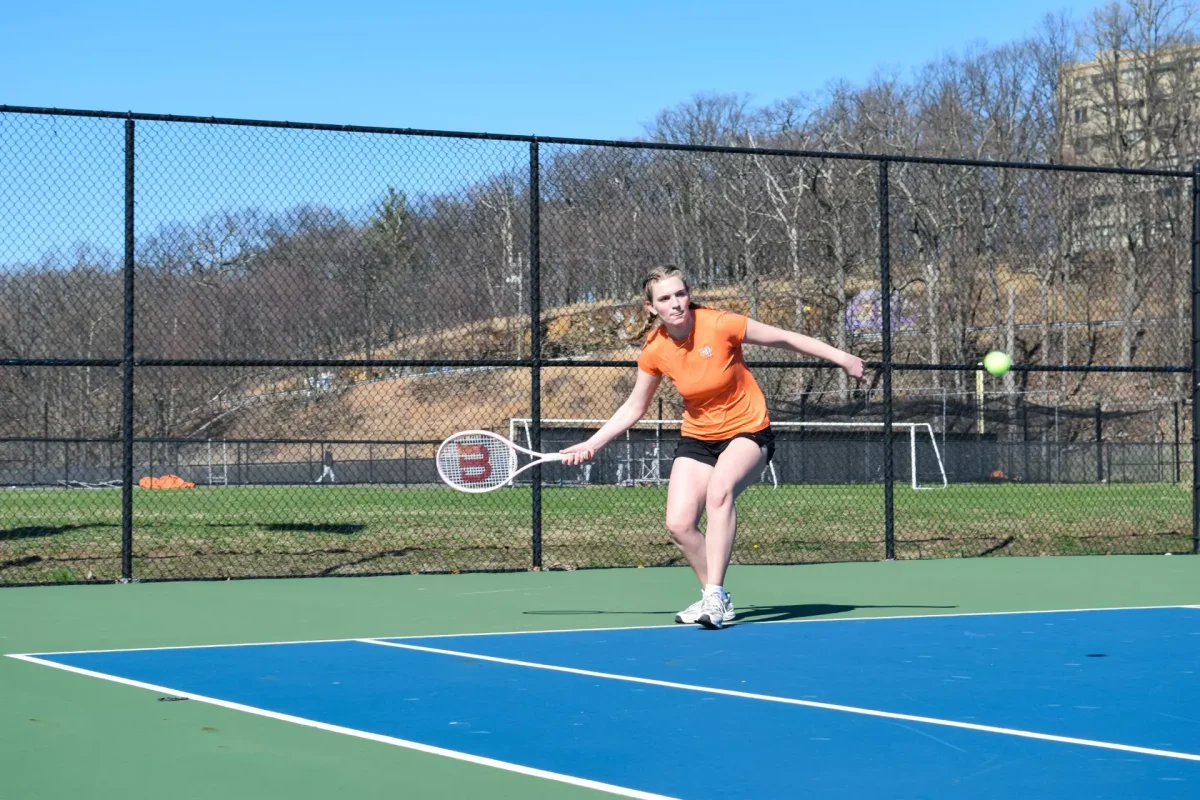
When we think about college athletics, we imagine structure, recruitment pipelines, and dedicated resources. Teams formed intentionally, not accidentally. But that’s not true for the William Paterson tennis team.
This is a team that was not built through scouting, coaching outreach, or institutional investment. Instead, every single player essentially recruited herself. The women on this roster did not receive a phone call or a campus visit. They emailed first. They initiated. Moreover, the university said yes, because it had to.
But why did it have too?
That vacuum has shaped every aspect of the team’s identity. Several players did not arrive as tennis players at all. They came from softball, volleyball, field hockey, and sports with their own demands and cultures. They filled in because someone needed to.
A complicated issue is raised from this: If players join out of necessity rather than for long-term commitment, what does that say about the program’s foundation? What does it say about the University’s commitment in return?
One of those multi-sport athletes, Joy Shand, junior, put it plainly.
She told me, “It is less pressure compared to softball. I put a lot of pressure on myself to perform well, but when it comes to tennis, I have fun.” She said joining tennis was less about building a competitive athletic identity and more about stepping in where help was needed: “For tennis, I’m just playing for fun and just helping out when I can.”

Beneath that honesty is something heavier, a question about why tennis is the sport that players feel they can “just help out” in, instead of one they feel supported to invest in.
Because the university is not exactly amplifying that need. As Joy said, “the university does not promote that kind of thing. Like, ‘oh, the tennis team is struggling.’ But they’re not promoting it or telling students they could try out.”
The difference in support is visible. She said, “Since I play for both, softball has a lot more resources and we definitely get more recognition too, and do more things on campus. And when it comes to tennis… when we do these athletic events for every athlete here, you don’t really see any tennis representation.”
When a team lacks visibility, it loses more than attention; it loses potential athletes. It loses legitimacy in the eyes of the campus community. It loses its future before it even arrives.
As a result, the stats have been predictable. The team has historically always had issues, opening its 2022–23 season without a single win. This season, there is improvement: now averaging .333 in doubles and .219 in singles, meaning about 2 matches were won but the team still lost more than half. They have yet to see a winning season. They have yet to develop a winning streak.
Effort is not the issue. Commitment is not the issue. Support is.
The team’s players are simply asking for more recognition and resources, without these two necessities the team will stay in the shadows of other sports on campus. At the end of the day, a non-winning team will never gain attention on its own.
The irony here is that the players have nothing but good things to say about Coach Hisham Abaza, a WP alum, a former professional athlete, someone who returned to give back to this program. They see his passion. They value his leadership. And yet… How much can one coach do without a system behind him? How great can any coach be when recruitment does not exist, resources are minimal, and players are learning the sport from scratch?
This is not a story about a failing team. It is a story about a team fighting to exist.
It is about student-athletes stepping up when the institution steps back.
It is about the uncomfortable truth that a program cannot shine when held together by improvisation rather than intention.
Right now, the team is surviving. But with support, it could actually compete.
With visibility, it could actually grow.
With real recruitment, it could actually win.
Furthermore, maybe that is the most electric part of this whole story: the potential is waiting. Now, the ball is in their court.