
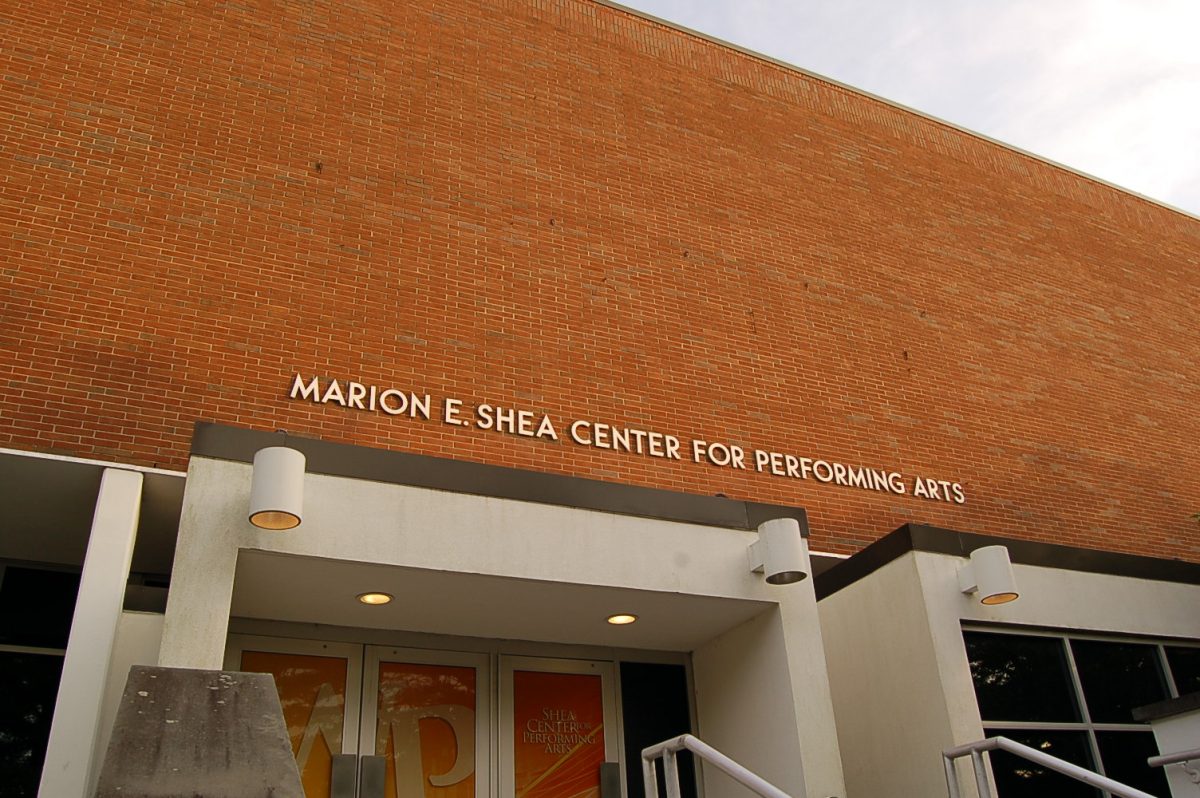
For some reason, I can’t help but to feel a sense of guilt when I attend concerts in our campus recital hall. A few weeks ago, I watched a phenomenal performance only to turn and see one other student present in the room. This is not atypical of these mid-week evening concerts, from the 20% of them I’ve made it to myself: out of 104 seats, a glance might generously suggest a half-full audience (as long as you don’t start counting), occupied by some loving yet likely disinterested relatives and siblings who can no longer sit still from aural stimulus alone.
This unsettling feeling has been bothering me since that evening. What I think this stems from is two plain truths: that I don’t care enough, and that we all don’t care enough.
I’ll call me out first. As I said before, I find myself only catching these concerts every so often. Sometimes I truthfully don’t know they are even happening, and that sentence right there is how easy it is to lie about that. These recital hall concerts receive the right number of printed posters in areas of heavy traffic on campus, but perhaps not everyone is trying to look.
So when I do happen to be in the music building the night a concert is happening, which is the common starting point for the rare times I end up attending shows in full, I might slip in to check the program and subsequently thank God a friend is performing near the beginning. If no one is, I usually slip out of the room, reasoning with myself that all the hard work I have to do that night is more important than seeing my peers present what they have been working on all semester: 20 minutes of practicing, two hours of talking, and thirty trips to the bathroom hoping that somewhere in the stretch between there and my practice room, someone will ask me to go to Taco Bell.
I know I am not alone in functioning like this, yet I think it needs to be said that I’ve recognized guilt isn’t the right feeling to be had. Our time is limited and valuable and should never be spent out of imaginary obligation. In my freshman year, a professor popped into my practice room and asked straight-forward if I could attend a guest artist concert because the room was basically empty, and it didn’t take more than five minutes for me to believe it should have stayed that way. I guess I just feel sorry the recital hall concerts aren’t as highly attended, but why? In an ideal world, more music people would support more music people. Swap out “music” for any other noun in that sentence and you’re still left with human nature. I’m sure the performers don’t care about who is in attendance, either.
So this doesn’t actually suggest that music majors hate music after all, as I’ve had to realize and release from my overthinking. But I have continuously asked myself, “why do music majors hate majoring in music?”
This question came to me a short time after the concert, when I was in an academic music class and the professor, a musician, not only egged on a conversation that celebrated a “haha I don’t know what I’m talking about” mentality, but started it. I couldn’t shake off the disappointment I felt to hear that, and even still it bothers me a little. Does it particularly matter in the real world to know what third species counterpoint is? No, and I certainly don’t know what that is, even though I was taught it. But hearing this exchange in a room of undergraduate music majors, a majority of them education majors, made me feel uneasy. I felt called out just as I deserved to be.
I dropped out of music education after my freshman year because I found myself not caring anymore, and I knew if I didn’t care, I would not be fit to get someone else to care. Doing that and remaining a Bachelor of Arts music major revealed for me a more suitable music-and-music-realm-appreciation role. Through this change, I could see just how much the majority of students really do vibrantly and inspiringly care about music and their level of being able to create said music, which is why I yet again ask “why do music majors hate majoring in music?” from a different standpoint.
It’s the most hardworking and talented people I know that have stints of falling out of love with their playing, or their creative process, or perhaps even listening to the genre that brought them to become a musician. Why is this the case?
On paper, it’s simple as to why it’s so hard. Every music major is a double major. Any kind of performance is music and entrepreneurship. Music education, that’s obvious as to why. And for music entertainment industries and sound engineering majors, some passionate students of these studies have outwardly questioned why they, too, are also required to still play their instrument at a high level.
As I’ve learned firsthand, there is an unfathomably advantageous upside to combining an at least once-leisurely passion with a degree, as well as a cynically cyclical downside. The perks, besides the obvious opportunity to get to learn techniques from professionals, are the experiences to grow with others seeking a similar lifestyle. The lasting outcome is unparalleled, as long as an environment of innocuously encouraging one another to chase said growth is nurtured.
However, where its biggest pitfall comes from is when that environment drowns in its own pool of student- and faculty-perpetuated apathy to care about growing and learning, and I feel so strongly the current state of the music department fits this description. Part of me wrestles sometimes with thinking that maybe we already see too much of each other, and hence that fear of judgement to do something outside the box is what keeps creativity from flowing, but then again, we ought to get over that in front of others or else we are really not getting over that fear at all.
I’ve heard twice in the last week alone that we aren’t making enough mistakes and are therefore not learning. One was from a graduate of the department who has found desirable success solely by performing. The other was from the professor who had also recently encouraged the students to not care about some things they learn, and I will agree that I’d rather leave here remembering to learn from many mistakes than third species counterpoint.
So, why do music majors hate majoring in music? Probably because it’s been too carefully designed on how it can be taught, but not how it can actually be learned. The most we’ll learn will come from one another, but if there’s not even a space to do that, well, what are we paying for?
Read more at shylamurray.com/smthingsblog