
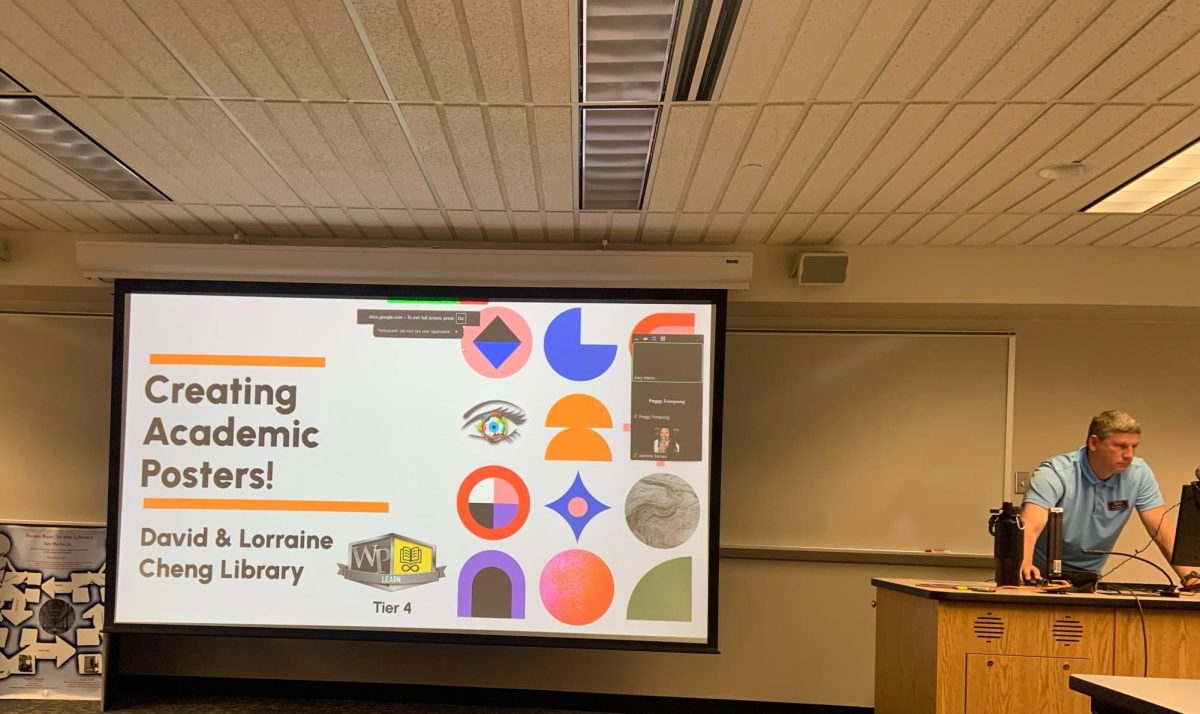
This past Thursday, November 20, 2025, the Library held a very interesting and informative event that covered the essential details of how to create an academic poster.
The presenter, Gary Marks, who is the Reference and Outreach Librarian at William Paterson, highlighted how important utilizing a poster is for students.
“So, what are the purposes of research posters? Basically, there are three. One is to summarize a research project or initiative for a specific target audience. Purpose two is it allows viewers to develop an introductory understanding of a research project without having to read a really long paper.” And thirdly, he states that “Poster sessions at conferences, symposiums, and academic events include opportunities for individuals who are viewing your posters to interact with the researchers.”
Using academic posters could not just help students learn to condense information on their own and present it, but it also provides an easier way for students to communicate what their topic and points of their presentation are.
Within the question-and-answer session of the presentation, students’ questions brought up concern about the difficulties they have in keeping their audience focused while they give their presentations. With academic posters, Mr. Marks highlights that just having a poster is one step closer to maintaining an engaged audience.
Furthermore, he dives into one of the key features that bring about this engagement and interest in your audience. “ Okay, so let’s talk now about design tips, because this is the fun part.
Some key things to keep in mind when you’re designing posters. Number one, and I can’t stress this enough, font size, color, and style.” Academic posters not only get your point across but can also bring out the creativity of your research. When an audience, for instance, sees a poster that has a good number of pictures, graphs, or visuals that promote a student’s research, they become more keen to listen and understand your research, Mr. Marks highlights.
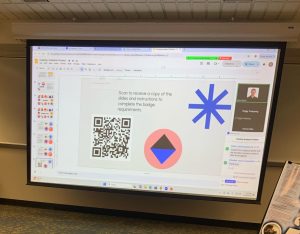
Additionally, he states, “QR codes are great ways to get your engagements up.” Utilizing QR codes also introduces the possibility of a digital poster, which is widely being used today with the convenience of technology.
Throughout the presentation, it became clear to students that making academic posters is both a learning lesson and a way to improve student creativity.
Students in attendance were very engaged and were reminded of the many resources that the library and, by extension, the librarians provide and, as such, are thereby invited to use. In the concluding segment of Mr. Mark’s presentation, the opportunity was given to students to obtain the Tier 4 Learning Badge.