
William Paterson welcomes its newest and most expensive student, the G1 Edu Humanoid. The recently acquired humanoid robot is already turning heads in the science department. But beyond the novelty, it represents a leap toward the future of hands-on learning. This grant was in support of the University ASPIRE (Access to STEM Pathways through Integrated Research and Engagement) program.
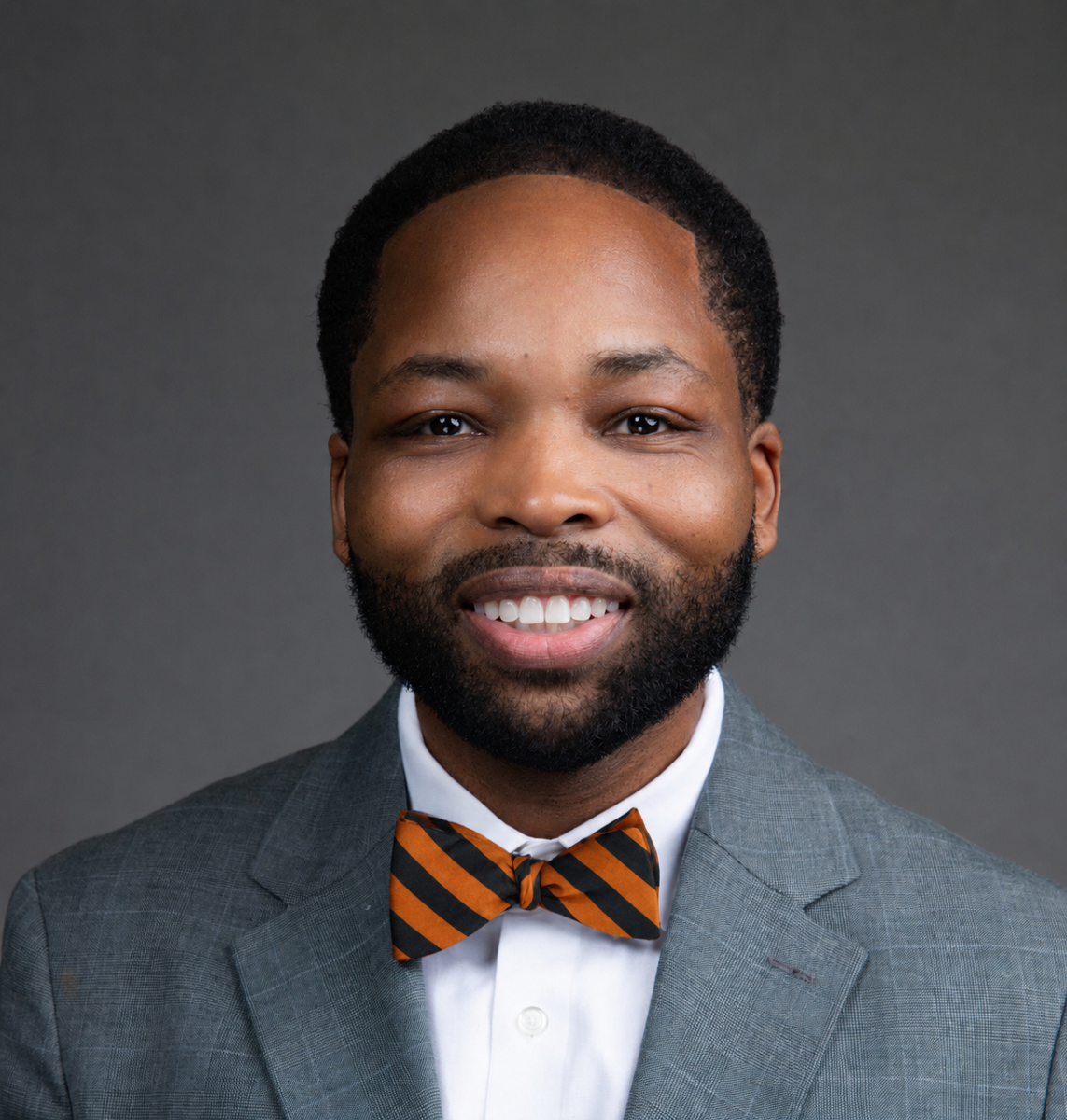
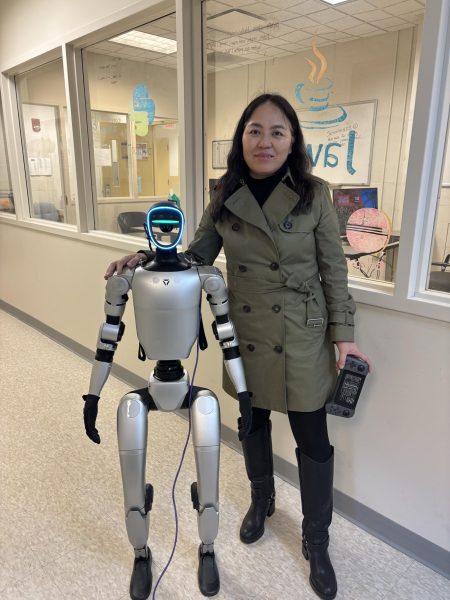
Working on this robot are Professor Dr. Wang and sophomore Adarsha Mishra. After speaking with them, it was learned that this robot is a symbol of how far education is willing to evolve.
As Dr. Wang pointed out, “the idea of robots has been around for 20, 30 years,” but with modern technology, “this robot can understand human thoughts because this robot is built with a large language model.” The goal for the robot is to act more human-like and begin to learn by itself.
However, we are still a long way from robots learning independently. Currently, Adarsha Mishra is the brains behind the robot’s every action, creating specific codes from scratch. The most challenging aspect of working on this robot is “the lack of data,” Mishra stated. And it doesn’t help that he is the only student working on this project.
“Since this is super new, and there are no tutorials on YouTube or anywhere else, and the SDK they provided is very scarce, most of the things are just testing and seeing what it does. We’re reading the data and then figuring out how to go forward from there,” stated Mishra when asked what a day in the lab looks like.
Initially, Mishra was always interested in programming, but he didn’t pick up robotics until this opportunity arose. To secure this opportunity, he submitted a 6-page proposal to Dr. Wang, outlining what he would bring to the table, how he would do so, and his credentials to support his claims.
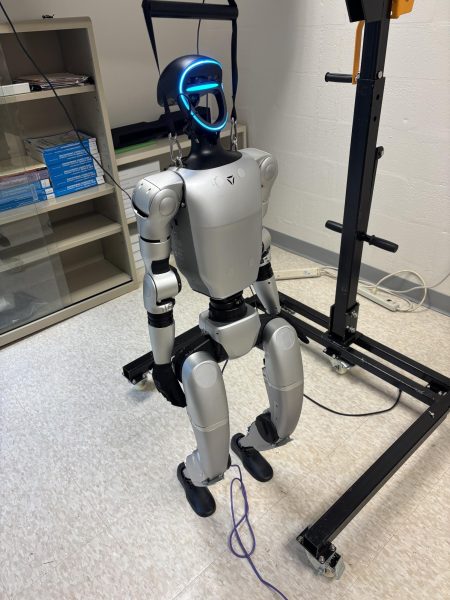
When asked what he has brought to the table so far, Mishra mentions that “If you tell it to wave, it will wave, if you tell it to shake its hand, then it will do that, and you could tell it to change its lights, or volume, some simple actions like that. We couldn’t do that before.” The robot is also able to answer a plethora of questions, as if you’re talking to a real-life ChatGPT.
Simple tasks that may seem easy for humans, like picking up a pen, are complicated to train into a robot, “because it’s not just about the movement, it also needs to have the sensor to feel… The sensors attack the texture of the object that they are trying to grab,” stated Dr. Wang.
Yet, Dr. Wang and Mishra aren’t done. Their future goals include starting new projects, expanding the robot’s capabilities, and positively impacting students on campus.
Dr. Wang hopes to implement facial recognition and dancing, and make it aware enough to detect objects in front of it and be able to move around them autonomously.
Additionally, although this project isn’t open to everyone yet, they hope to open a robotics club in the spring semester, “so that other people can be involved in programming and then what we’re thinking is setting up specific groups for specific types of projects so someone works with the camera, someone works with the locomotions, something like that” stated Mishra.
In addition to leading the robotics club, Dr. Wang has her sights set on something even more ambitious: creating what she calls a “class agent.” Rather than just a research tool, she envisions the humanoid robot becoming an active participant in her classroom
She states, “For example, I’m teaching a data stretch class and I don’t have a tutor for my class. I want to make this one… so he can be my tutor in a lab session, and then he can walk around the classroom. And so if the student has questions, you know, walk to answer a question and then help people with their code.”
It’s an idea that sounds straight out of a sci-fi movie, but Dr. Wang views it as the next logical step in integrating artificial intelligence with education.
Still, with innovation often comes apprehension. As AI becomes more present in classrooms and everyday life, conversations about its risks are nearly impossible to avoid. Dr. Wang acknowledges the public’s unease but believes much of it stems from misunderstanding rather than reality.
“People are terrified of AI doing something bad,” she said. “But actually, now we are far from that. We are far from that.”
She explained that despite the impressive intelligence behind these systems, their physical and cognitive limits are still significant.
“So think about it, it’s hard for him to pick up stuff from the floor,” she laughed, referring to the robot’s clunky grasp on simple human motions.
Even the software driving modern AI, like ChatGPT, is closely monitored and heavily regulated.
“They started to regulate when ChatGPT generated these answers,” Dr. Wang noted. “They give a lot of rules of what they can and cannot do. If someone asks ChatGPT how to make a bomb, for example, it cannot answer that question.”
In the future, these robots can be trained to assist with rescue missions, allowing them to enter areas that humans would rather not enter.
By grounding the conversation in both practicality and policy, Dr. Wang aims to remind students that, while AI is evolving rapidly, it remains under human control.
On another note, students have voiced concerns online, asking why the university can fund a robot but still struggles with campus issues.
An Instagram post from William Paterson’s main page caught stray comments from students, such as “Dorms still got mold, I bet,” “AI robots on campus but still no cameras in the power art center?” and “But we still can’t get good dining hall food?”
However, the funding behind this project tells a different story. The robot wasn’t purchased out of the University general budget—it was granted through the ASPIRE program, a national initiative designed to strengthen STEM education and promote research opportunities for undergraduates. The grant was earmarked explicitly for technological advancement within the Science Department, meaning it could not be legally or financially redirected toward unrelated campus needs.
In other words, this wasn’t a case of choosing robots over repairs; it was an investment targeted at academic growth and hands-on learning. The project stands as part of a broader push to position William Paterson as a space where innovation can thrive, even amid the day-to-day challenges students experience elsewhere on campus.
In the quiet hum of the science lab, it’s easy to forget that this robot, a blend of wires, sensors, and coding, isn’t just another machine. It’s a marker of how far curiosity can take a campus when innovation meets imagination. For Dr. Wang, it’s not about building something to replace human effort, but to amplify it, to show students that technology can be a partner in discovery, not a threat to it. As for Adarsha Mishra, he plans to continue his research and experience working with the robot until he graduates.
As the robot learns to move, respond, and perhaps one day teach, it mirrors the same process happening across William Paterson: a community learning to adapt, question, and dream in sync with a changing world.